

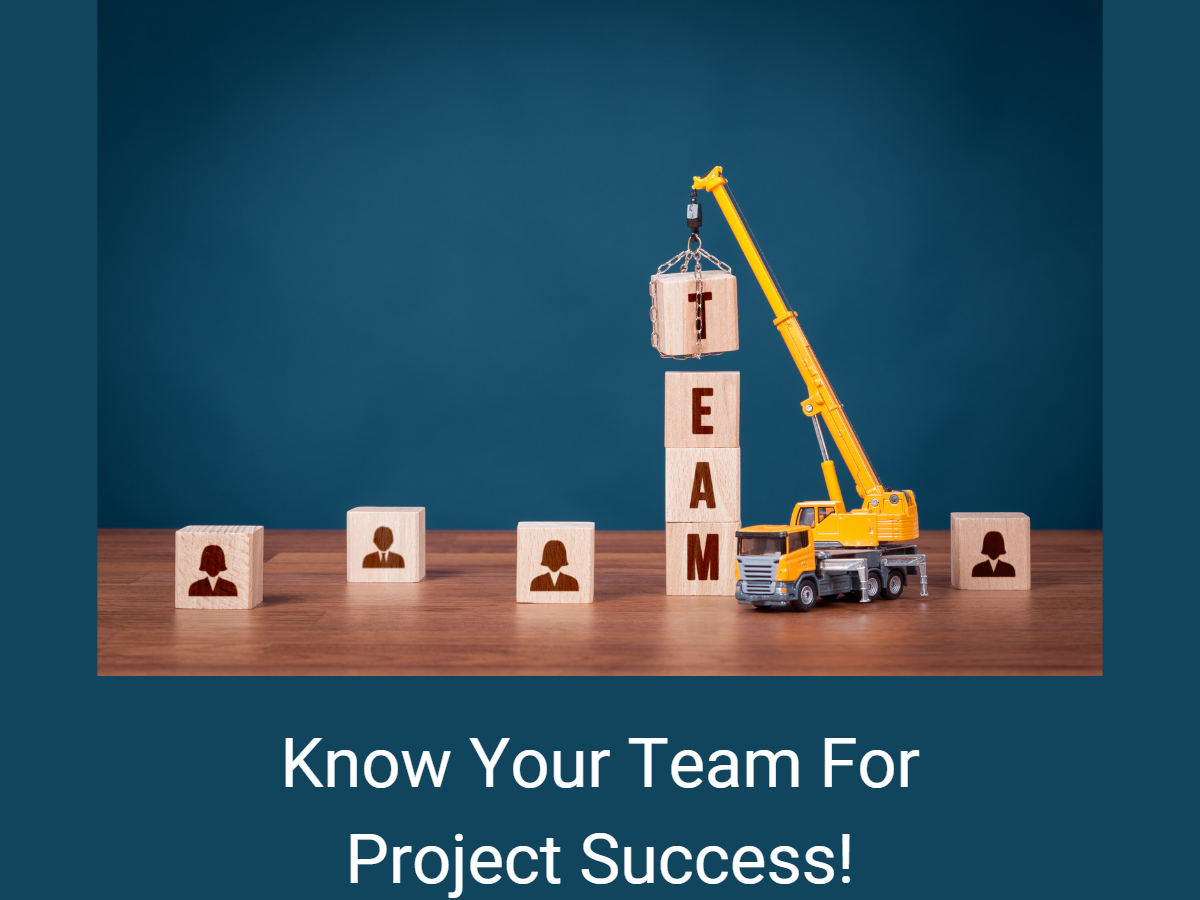
On paper, Jim was a highly skilled project manager. He could build fully loaded and properly leveled project plans with all dependencies laid out and risks identified. Yet, six months into the project, it was already two weeks behind schedule and over budget. How did this happen? Jim did not know the four proven ways to know his team. (For other tips on project success and workplace wellness, request our 16 Well-Led Guidelines by clicking this link).
Jim, a project manager who excelled in the mechanics of project management, had overlooked a crucial aspect of people implementing the plan. He was familiar with their schedules and roles on paper but had not delved into his team members’ true strengths, aspirations, or commitments beyond the workplace. By understanding and valuing the unique strengths of each team member, Jim could have made them feel more integral to the project’s success. Jim rarely ventured out of the project management office to gather real-time feedback or gauge the team’s morale. He could identify a scrum team’s slipping velocity, but he was clueless about the reasons behind it. In a way, Jim was like the Beatle’s Nowhere Man. You could even tweak the lyrics to fit Jim’s situation.
He's a real PMO Man,
Sitting in his PMO land,
Making his fancy plans but knowing nobody!

Always has a metric, it’s true,
And he’s sure to tell you, too,
But the team he never knew at all.

PMO Man, please listen,
There are deadlines we are missing,
PMO Man, leverage your team and give them a hand.
Jim knew his plan, but to achieve project success and a happy and fulfilled team, it is imperative to understand your team and let your team understand you. A project manager who is not aware of the skills of their team members and the skills required for the project will have critical gaps that surface at the most unexpected times. A team that fails to leverage its strengths and disregards its member’s aspirations will be significantly less productive than one that does. You can inspire higher commitment and productivity by understanding and leveraging team members’ aspirations. Prioritizing team satisfaction is not just a feel-good measure, it is essential for project success and team retention. On the other hand, when people are unhappy, they sometimes leave in the middle of a project and send it into a tailspin.
Here are four ways Jim should have done it, and you should do it when you are a project manager.
1. Understand The Strengths and Skills of Your Team
It’s important to note that strengths and skills are different. A strength is an innate ability that a person naturally excels in, while a skill is a learned ability that can be developed and honed over time. For example, my top two strengths on the Clifton Strengths Assessment are Input and Learning, while my skills include project management and the Public Services industry.
How do you obtain knowledge of your team’s strengths and skills and leverage them? First, gather the latest strength and skills assessments from each team member. I use the Clifton Strength Assessment for strengths. In contrast, skill assessment is a combination of reviewing the certifications of your team members and often company-developed assessments for specialized and industry skills.
Next, you need to compare the team’s overall strengths to determine if a particular strength is overweighted or a missing necessary strength. I will give you a simple example. As mentioned before, I am strong in gathering and assimilating input and learning, while I am weak in the critical strength of WOO, which stands for Winning Others Over. I am quiet and reserved when I first meet someone. This is why I always had a person who excelled in this area on my team. I would figure out the plan and what we needed to do, and then I had my colleagues (two of the best were Andy and Seb), who excelled in WOO, introduce the plan to new stakeholders. If you find a gap in strengths, you should look to switch up the team.
Lastly, you look for gaps between your team members’ skills and those needed, as defined by a skills matrix. This differs from the strengths analysis because skills are often specialized, and you must review the project carefully to determine all the skills. I remember one project in which we were missing a skill in a third-party product that was essential to the project. In this case, we did not determine if we needed the skill ahead of time. On other occasions, I have seen projects single-threaded in a skill. In this case, cross-training is in order.
2. Know Your Team Members’ Personalities and Overall Dynamics
Even the most skilled team with abundant strengths sometimes fails if it does not have good chemistry. One example was the 2013 – 2014 Los Angeles Lakers, who had many stars like Dwight Howard, Paul Gasol, and Kobe Bryant, to name just a few. Yet they barely made the playoffs and were swept in the first round, primarily due to personality conflicts between Kobe and Dwight.
To avoid being like the 2013-2014 Lakers, leaders should know their team’s and project stakeholders’ personality types. I recommend using an assessment such as the DISC assessment, which groups people into four primary categories: Driver (Dominance), Expressive (Influence), Amiable (Steadiness), and Analytical (Conscientiousness). You use this knowledge to understand how a group member reacts to an assignment, change, or interaction. This knowledge is also helpful in managing meetings and drawing out useful information from less vocal personality types. This awareness among team members will help to make interactions more civil and beneficial.
3. Know Your Team’s Aspirations and Goals
The last element of understanding your team is knowing their aspirations and goals. This knowledge helps you do two things.
First, you can match the aspirations and goals of your group against any gaps in skills and strengths in the overall team. Here is a real example from a project I managed. Several of our team members wanted to learn about rules engines and wanted to become rules engine developers. This aspiration matched a gap we had on the project with a critical skill. By identifying both the skill gap and the aspirations, we developed rules training that helped the project and fulfilled the aspirations of some members.
Second, you can develop more inspiring project goals by aligning them with individual aspirations. Here is an example from one of my colleagues who implemented this idea on a project where I was the Quality Assurance Director. Many people were excited about chatbot technology, and we were required to train seasonal staff in a complex, rules-based application. The project established a KPI on how rapidly they could train new staff on the application and created a chatbot to guide new employees through the more difficult steps. The project exceeded the KPI, and the project members were more satisfied and had less attrition.
4. Be Transparent and Welcome 360 Feedback
The first three suggestions were about getting to know your people. This last suggestion is about letting them know about you and allowing them to recommend ways to improve your project and yourself.
You should be transparent about the project’s progress and be authentic in your leadership approach. Do not be afraid to tell hard truths. The worst thing that a project manager or leader can do is to say a project is on track when it isn’t or make a situation more dire than it is. Nothing that deflates the morale of a project more than distrust. Patrick Lencioni writes in The Five Dysfunctions of a Team:
“Where there is no trust, there is no respect, no open communication, and no shared vision. Without these, progress grinds to a halt.”
Equally important to being authentic and trustworthy is being approachable and humble. It takes courage for group members to provide feedback to a project manager, especially when they are supervisors. Receiving such 360-degree Feedback, however, is necessary for you and the project to improve. When a team member makes a recommendation, listen proactively, making sure you take action when called for. Most of the time, the best advice comes from those closest to the project.
These four suggestions can be used to drive project success and team satisfaction. And help you avoid being the Nowhere Man.
